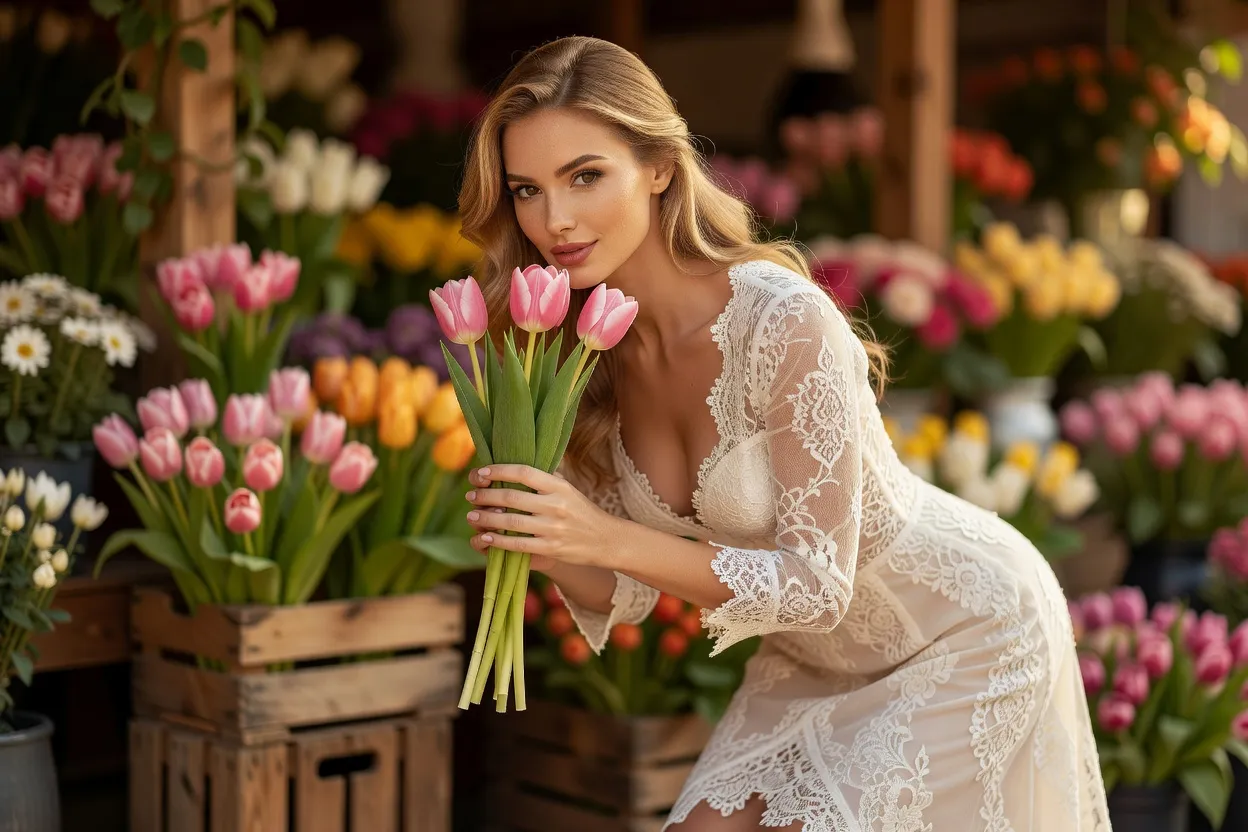
In much of Russia, Ukraine, Belarus and Central Asia, flowers are part of everyday social life. People bring them to a first date, to a birthday, to a visit at home, to a theatre premiere and to a graduation. Florist stalls stay open late, and bouquets are often sold wrapped and ready to hand over. That familiarity is why a few conventions have grown up around them. None is a law, and a woman who sees that you tried will rarely mind a slip, but knowing the conventions lets you give with confidence.
How many flowers: the odd-number custom
The best-known custom is the one about numbers. A bouquet for a living person is traditionally made up of an odd number of stems: one, three, five, seven and so on. An even number of flowers is traditionally reserved for funerals and memorials. Florists in the region know the custom well and usually build bouquets accordingly, but if you are choosing stems yourself, count them.
There is one practical exception. Very large bouquets, from about a dozen stems upwards, are often sold as a single arrangement, and the count matters less. Many people treat the rule as applying to small and medium bunches. If you are unsure, three or five stems of a good flower are a gift in themselves.
Which flowers to choose
Seasonal flowers are the safest. Tulips in spring, peonies in early summer, roses, lilies and chrysanthemums as the year goes on. Wildflowers and garden flowers are loved by many, especially around a summer dacha.
- Roses are a classic, and a deep red rose still reads as a statement of romantic interest. On a first date it can feel heavy; a smaller bunch in a softer colour is easier.
- Tulips are strongly associated with spring and with International Women's Day on 8 March.
- Mimosa, the small yellow spring flower, is the traditional bouquet for 8 March in Russia. You will see it in markets in the days before the holiday. It is an exception to the rule below about yellow.
- Chrysanthemums, carnations and lilies are all common, but in some families carnations recall official ceremonies and chrysanthemums recall autumn and cemeteries. If you do not know her taste, choose something else.
The yellow flower superstition
A folk belief holds that yellow flowers signal separation or an end to a relationship. Many people no longer take it seriously, and yellow sunflowers and mimosa are widely given, but older relatives may still raise an eyebrow at a bunch of yellow roses. For a first bouquet, avoid the question and choose white, pink, red, orange or purple.
Presenting the flowers
Remove the price tag, keep the wrapping and hand over the bouquet with a short sentence. Do not give flowers in a plastic bag. If you are arriving at her home, take the flowers out of any carrier bag before you ring the bell. A woman who receives flowers from a man will often put them in water right away, so a tall bunch that needs a large vase can create small difficulties; choose a size that fits an ordinary home.
Once flowers have been given, it is usual for the woman to say thank you with a smile, perhaps a light kiss on the cheek. A man in a hurry sometimes forgets to say anything himself. A short sentence is plenty.
Gifts for her
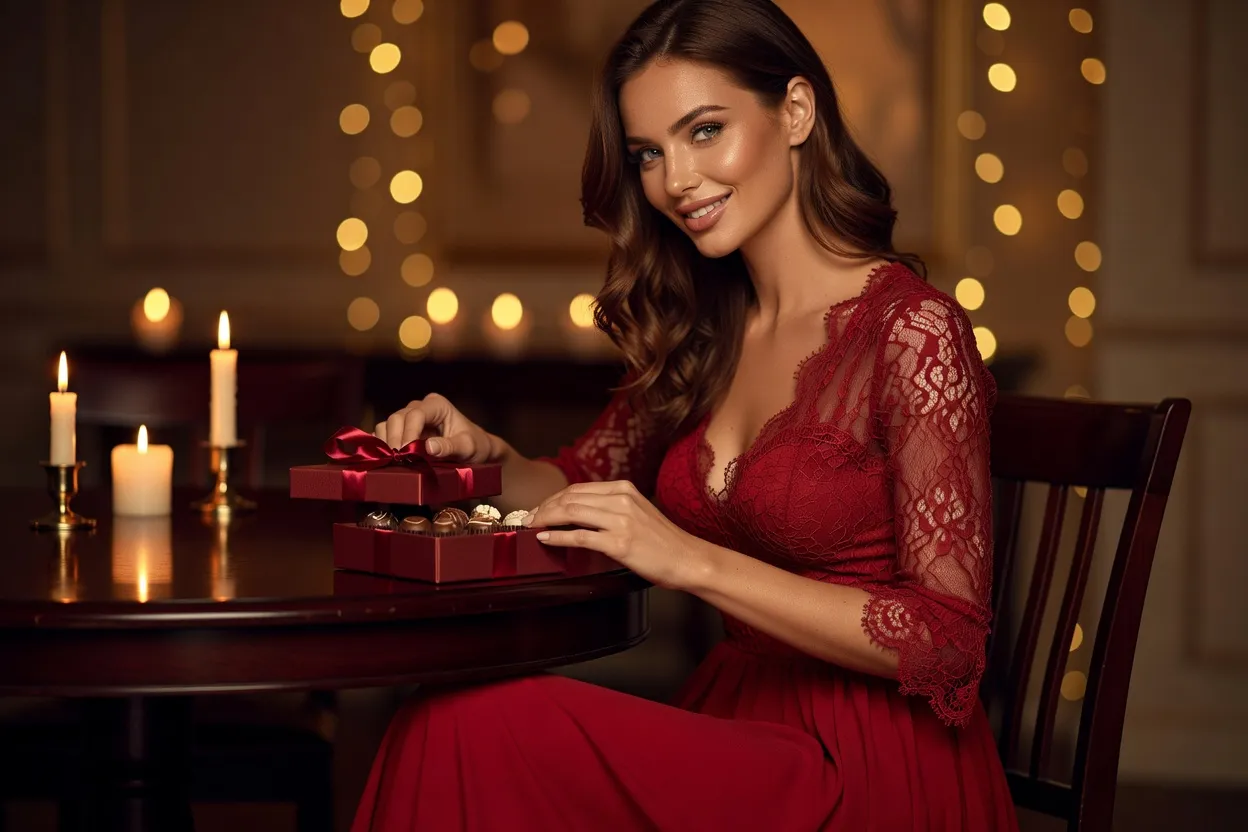
For the first two or three meetings, small and thoughtful beats expensive. Good chocolates, a book she mentioned, a hand cream, a scarf, a box of tea or a pot of honey from your region all work well. Jewellery, perfume and clothing can be taken as a sign that you want more intimacy than she is ready to offer, and expensive presents early on may make her uncomfortable or suspicious. In a longer relationship, the thought and the attention to what she likes matter more than the price.
Experiences are an excellent gift in cities: tickets for a concert or a play, a table at a quiet restaurant, a walk in a botanical garden. They give you something to talk about afterwards and they do not leave her with an object she may not want.
Superstitions about particular gifts
Many Russian-speaking people observe some superstitions about gifts, even those who laugh at them. Common examples:
- Knives and sharp objects are said to bring a quarrel. If you give one, the folk remedy is that the recipient pays a small coin in return.
- Watches are sometimes said to count down the time of a relationship.
- Handkerchiefs are associated with tears.
- An empty wallet, a bag or a purse without a banknote inside, is said to bring poverty; put a small note in it.
- Mirrors are seen by some as unlucky when given.
Treat these as courtesy points rather than facts. If you are not sure, choose another gift. A woman who knows the superstition will often smile and make a joke of it, and one who does not will never notice.
Gifts for her family
If you are invited to her family's home, bring something for the household as well as for her. A cake or a box of sweets for the table is almost always appropriate, as is a bottle of good wine or spirits if the family drinks. A small gift from your own country, such as a local speciality, a calendar or a book of photographs of your region, is especially welcome and gives people something to talk about. For children, bring a small toy, a book or sweets.
Do not bring an overly expensive item to a first family visit. It can embarrass the hosts, who may feel they must reciprocate. For more on the visit itself, see the guide to meeting her family.
Some marriage agencies and travel guides also publish their own advice on this subject; for example, Bride in Russia, a marriage agency, keeps a blog that includes pieces on gifts and etiquette. We are not recommending any agency, and the usual cautions about verifying any provider apply. Read such material as one view among several.
Sending flowers from abroad
If you cannot be there in person, flowers can still travel. Order through a local florist with a clear delivery policy rather than an unfamiliar website, and write down the order details and the confirmation. Ask her first whether she would like flowers delivered to her home or to her workplace; some women prefer not to receive a conspicuous bouquet at the office, and others love it. Choose a delivery window she can confirm, because a bouquet left on a doorstep in winter frost or summer heat will not last. Write the card in simple Russian or in your own language with a Russian greeting, and keep the message short and warm. The phrasebook has phrases you can copy.
Never ask a woman you have not met to pay a delivery fee, a customs charge or any other cost connected with a gift. A gift that creates a bill for the recipient is a warning sign. Likewise, be cautious of any service that offers to "choose and send gifts for you" and asks for advance payment through a channel you cannot verify.
Mistakes that are easy to avoid
- Giving an even number of flowers to a living person without knowing the custom.
- Leaving the price tag on a gift or a bouquet.
- Choosing an expensive item early in the relationship, which may make her feel indebted.
- Giving cash as a gift in a romantic relationship, which can be read as payment.
- Bringing only flowers to a family dinner and nothing for the table.
- Expecting her to share in the superstition, or to laugh at it. Watch her face and follow her lead.
- Forgetting her mother or sister on 8 March when you are visiting the family.
Gifts for children and older relatives
If she has a child, bring something suited to the child's age and not too elaborate: a book, a puzzle, a set of coloured pencils or sweets. Ask her mother or her first, in case of allergies or family rules about sugar. For older relatives a box of good tea, a jar of honey, a calendar with views of your region or a small photograph album of your home will be appreciated more than a costly object. What counts is that you noticed them.
Occasions that call for a gift
| Occasion | Date | What is customary |
|---|---|---|
| International Women's Day | 8 March | Flowers (tulips, mimosa), a small gift, a card |
| Birthday | Her own date | Flowers, a thoughtful gift, a toast |
| Name day (imeniny) | Varies, see the holidays guide | A small gesture; some families still mark it |
| New Year | 31 December and 1 January | A small present, sweets, a shared meal |
| Defender of the Fatherland Day | 23 February | A gift is for male relatives and colleagues, not usually for her |
Quick rules to remember
- Odd number of stems for a living person.
- Choose seasonal flowers in soft or bright colours; skip yellow roses in the first bunch.
- Small, thoughtful gifts early on; avoid expensive jewellery and perfume.
- Skip knives, watches and handkerchiefs unless you know the person laughs at superstition.
- Bring something for the table when you visit a family.
- Take off the price tag, keep the wrapping and say a few warm words.
Customs described here are widely documented but vary by family, region and generation. Reviewed on 6 November 2026. No statistics are quoted.
Frequently asked questions
What gifts are suitable for the first few meetings?
For the first two or three meetings, small and thoughtful beats expensive. Good chocolates, a book she mentioned, a hand cream, a scarf, a box of tea or a pot of honey from your region all work well. Jewellery, perfume and clothing can be taken as a sign that you want more intimacy than she is ready to offer, and costly presents may make her uncomfortable.
What should I bring when I am invited to her family's home?
Bring something for the household as well as for her: a cake or a box of sweets for the table, and a bottle of good wine or spirits if the family drinks. A small gift from your own country, such as a local speciality or a book of photographs, is welcome. For children, bring a small toy, a book or sweets. Avoid anything overly expensive, which can embarrass the hosts.
Which gifts are said to bring bad luck?
Common superstitions say that knives and sharp objects bring a quarrel, watches count down the time of a relationship, handkerchiefs are associated with tears, an empty wallet brings poverty, and mirrors are unlucky when given. The guide treats these as courtesy points rather than facts. If you are not sure, choose another gift. A woman who knows the superstition will often smile and make a joke of it.
How can I send flowers to her from abroad?
Order through a local florist with a clear delivery policy rather than an unfamiliar website, and keep the order details and confirmation. Ask her whether she would like them delivered to her home or her workplace, and choose a delivery window she can confirm. Keep the card short and warm. Never ask a woman you have not met to pay a delivery fee or customs charge; that is a warning sign.
Which gifts and flowers go with which occasions?
For International Women's Day on 8 March, give flowers such as tulips or mimosa, a small gift and a card. A birthday calls for flowers, a thoughtful gift and a toast. A name day deserves a small gesture. New Year suits a small present, sweets and a shared meal. On 23 February, Defender of the Fatherland Day, a gift is meant for male relatives and colleagues, not usually for her.